Dollhouse scales explained: 1:12, 1:24 and 1:48
A scale of 1:12 means one unit on the model stands for twelve of the same unit in real life. Divide any real measurement by the scale number to get the miniature size.
The common scales
| Scale | Also called | One real foot becomes | One real metre becomes |
|---|---|---|---|
| 1:6 | Playscale (fashion dolls) | 2 in | 166.7 mm |
| 1:12 | One-inch scale | 1 in | 83.3 mm |
| 1:24 | Half-inch scale | 1/2 in | 41.7 mm |
| 1:48 | Quarter-inch scale | 1/4 in | 20.8 mm |
1:12 is the most widely used dollhouse scale, so most furniture and accessories are made for it. 1:24 and 1:48 suit smaller houses and room boxes.
Real furniture at each scale
| Real piece | Real size | 1:12 | 1:24 | 1:48 |
|---|---|---|---|---|
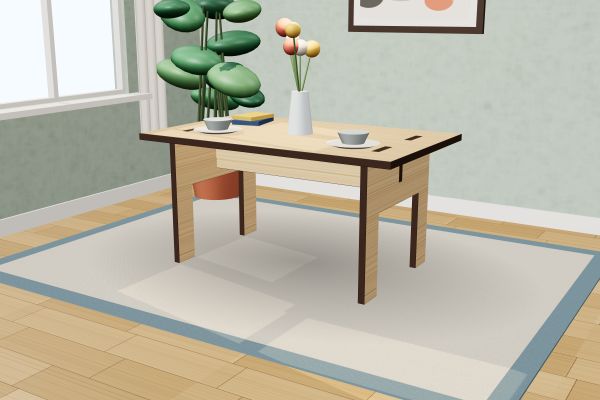
| Dining table height | 750 mm | 62.5 mm | 31.3 mm | 15.6 mm |
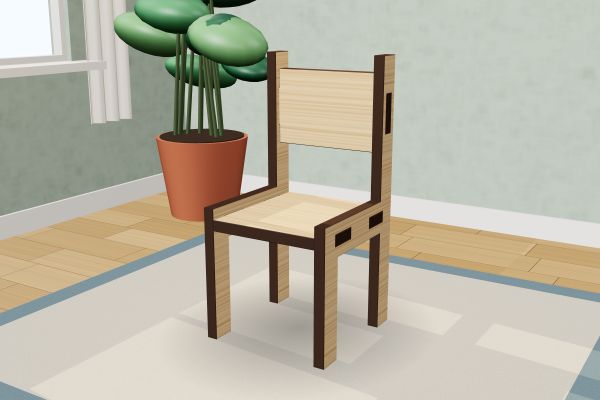
| Chair seat height | 450 mm | 37.5 mm | 18.8 mm | 9.4 mm |
| Bookcase height | 1800 mm | 150 mm | 75 mm | 37.5 mm |
| Interior door height | 2000 mm | 166.7 mm | 83.3 mm | 41.7 mm |
| Ceiling height | 2400 mm | 200 mm | 100 mm | 50 mm |
Working out your own size
Measure the real object, or look up its usual size, and divide by the scale number. A sofa 2100 mm long becomes 2100 ÷ 12 = 175 mm at 1:12. To go the other way, measure a doll or a piece you already own: a door 83 mm tall is close to 1:24.
Scale and material thickness
Sheet thickness does not shrink with the model. A 3 mm sheet looks like a sensible 36 mm board at 1:12, but like a heavy 144 mm beam at 1:48. For small scales use thinner material: 1 to 1.5 mm card, or 2 mm MDF. The template redraws every joint when you change the thickness.